
Average basket size, revenue per head: how to measure the performance of your live merch sales?
 Océane ·September 10, 2026 · 7 min read
How much does a fan spend on average at a merch stand during a concert? Across all events covered with Yaarz, the answer is clear: €38.28. But behind this average lies a much more nuanced reality, one that varies depending on venue capacity, music genre, and sales context. Here's a breakdown of the key metrics for managing your direct-to-fan merch sales at live events.
What is average basket size in event merchandising?
Average basket size represents the average amount spent by a fan on a single purchase at a merch point of sale. It's one of the most closely tracked metrics by promoters, tour managers, and artists looking to evaluate the performance of their product offering during a tour or live event.
In practice, this metric helps explain how fan spending evolves according to two main groups of factors:
Event context: city, venue type, time of year, timing of the sale (before, during, or after the show), and whether the artist is present at the point of sale.
Commercial and operational choices: sales format (physical stand, click & collect, pre-order), and how the offer is structured (collector or signed items, bundles).
Tracking average basket size over time, event after event, helps identify the levers to pull in order to better manage your merch strategy and maximize revenue generated at each date.
Average basket size increases with venue capacity
The first insight from data collected by Yaarz across all covered events: fans' average basket size rises with venue capacity.
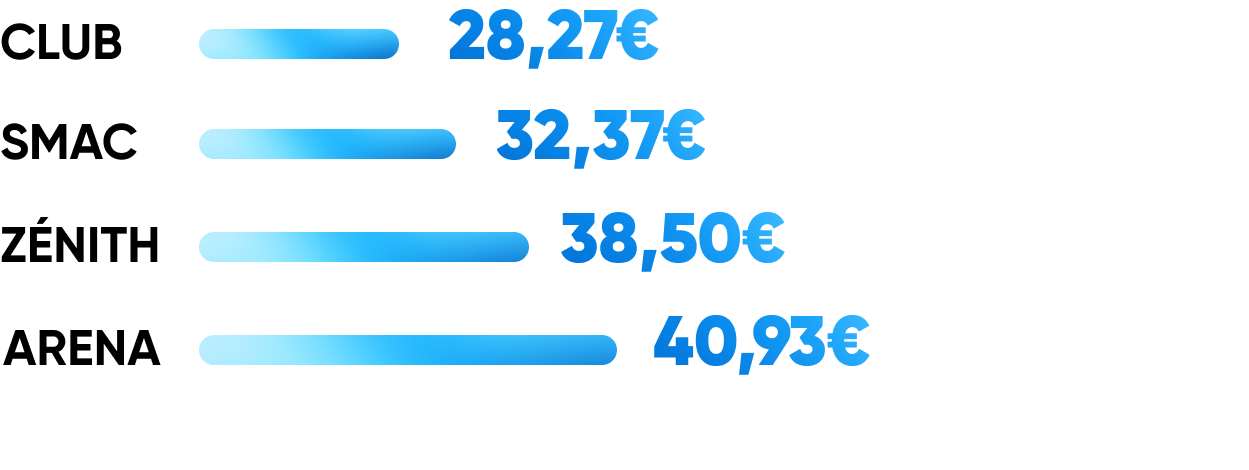
With a gap of nearly €15 between a club and an arena, this progression is far from trivial. It reflects different consumption dynamics depending on event size: the larger the capacity, the more the live experience takes on an exceptional dimension, which encourages impulse buying and higher spending per fan.
Smaller venues, higher purchase rate: the central role of the stand
While average basket size is lower in smaller venues, another factor nuances this reading: the purchase rate, meaning the proportion of fans who actually make a purchase.
In smaller-capacity venues (clubs, mid-size venues), the merch stand structurally occupies a central place in the fan's journey. Its proximity to the entrance, the stage, or circulation areas makes it an almost unavoidable point of passage, which mechanically increases the proportion of buyers, even if individual spending remains more modest.
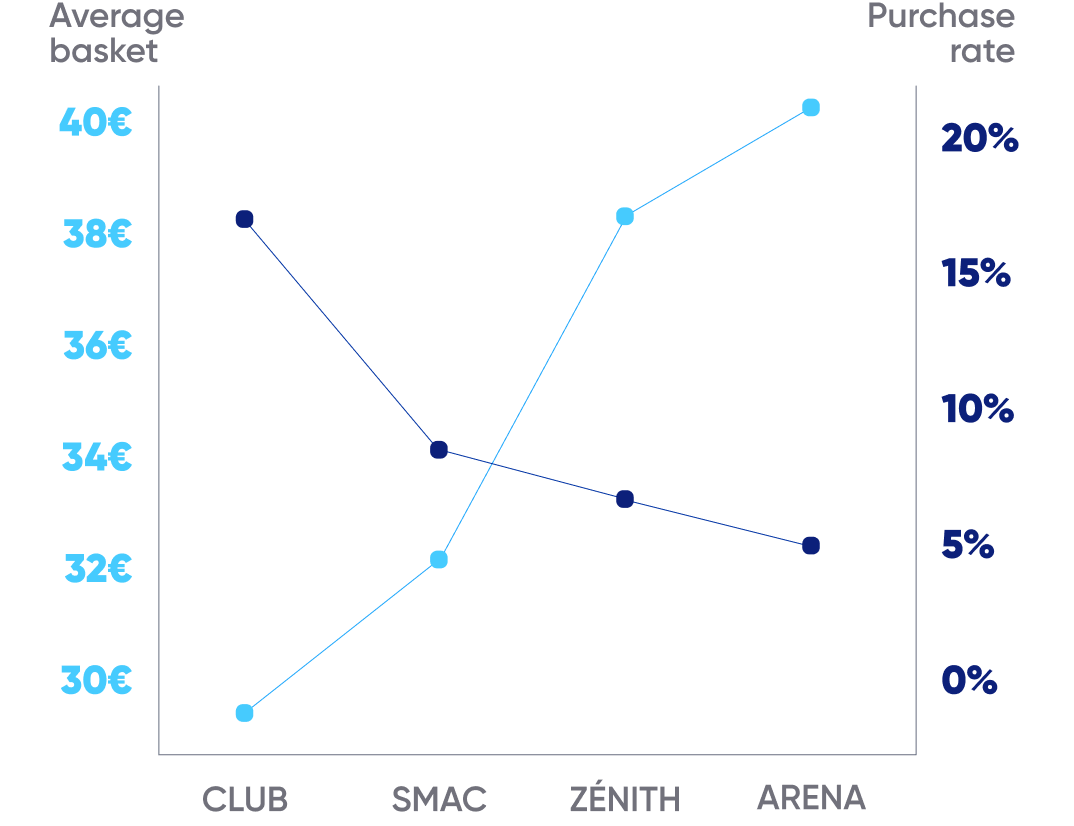
This cross-analysis between average basket size and purchase rate by venue capacity is essential to avoid drawing hasty conclusions from average basket size alone: a small venue can generate a higher conversion rate than a large arena, even with a lower average ticket.
Revenue per head, the most revealing metric
Cross-referencing several metrics always sharpens the reading of merch performance. But if only one had to be kept, it would be revenue per head.
This metric is calculated simply:
Revenue per head = total event merch revenue (incl. tax) / actual venue capacity
Unlike average basket size, which only accounts for buyers, revenue per head factors in the entire audience present, buyers and non-buyers alike. It therefore provides a more complete view of the overall economic performance of merchandising on a given date.
This average spend per fan is closely tied to the artist's or event's music genre, and to the purchasing culture of the audience, which varies from one scene and fan community to another:
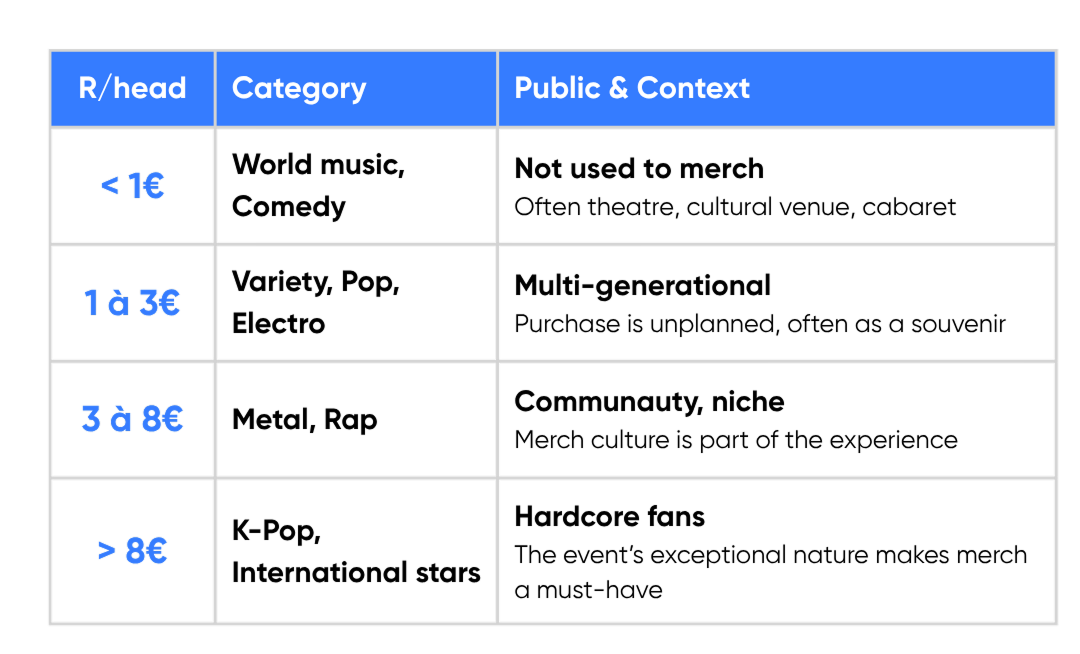
With revenue per head, it becomes possible to significantly refine the reading of a tour's merchandising performance, and to identify the most profitable dates or formats.
Managing merch performance in real time with Yaarz
Average basket size, purchase rate, revenue per head... these metrics carry even more value when tracked over time and compared across events. That's precisely what the Yaarz dashboard is built for: keeping an eye on your data and sales performance in real time, whether on-site or remote.